Physiotherapy in Muttenz
Listen · Examine · Explain · Treat · Activate · Train
Physiotherapy in Muttenz
Listen · Examine · Explain · Treat · Activate · Train
Therapy
What is physiotherapy?
Physiotherapy is often associated with pain – yet it is about the opposite: we help you become resilient, mobile and fit again and improve your quality of life at home, at work and in your free time.
This applies after an accident or surgery, with acute and persistent complaints, and for people with a disability. And even healthy people can use physiotherapy to prevent problems and maintain their performance.

How it works
Listen – Examine – Explain – Treat – Activate – Train
Scientific evidence
What makes good physiotherapy
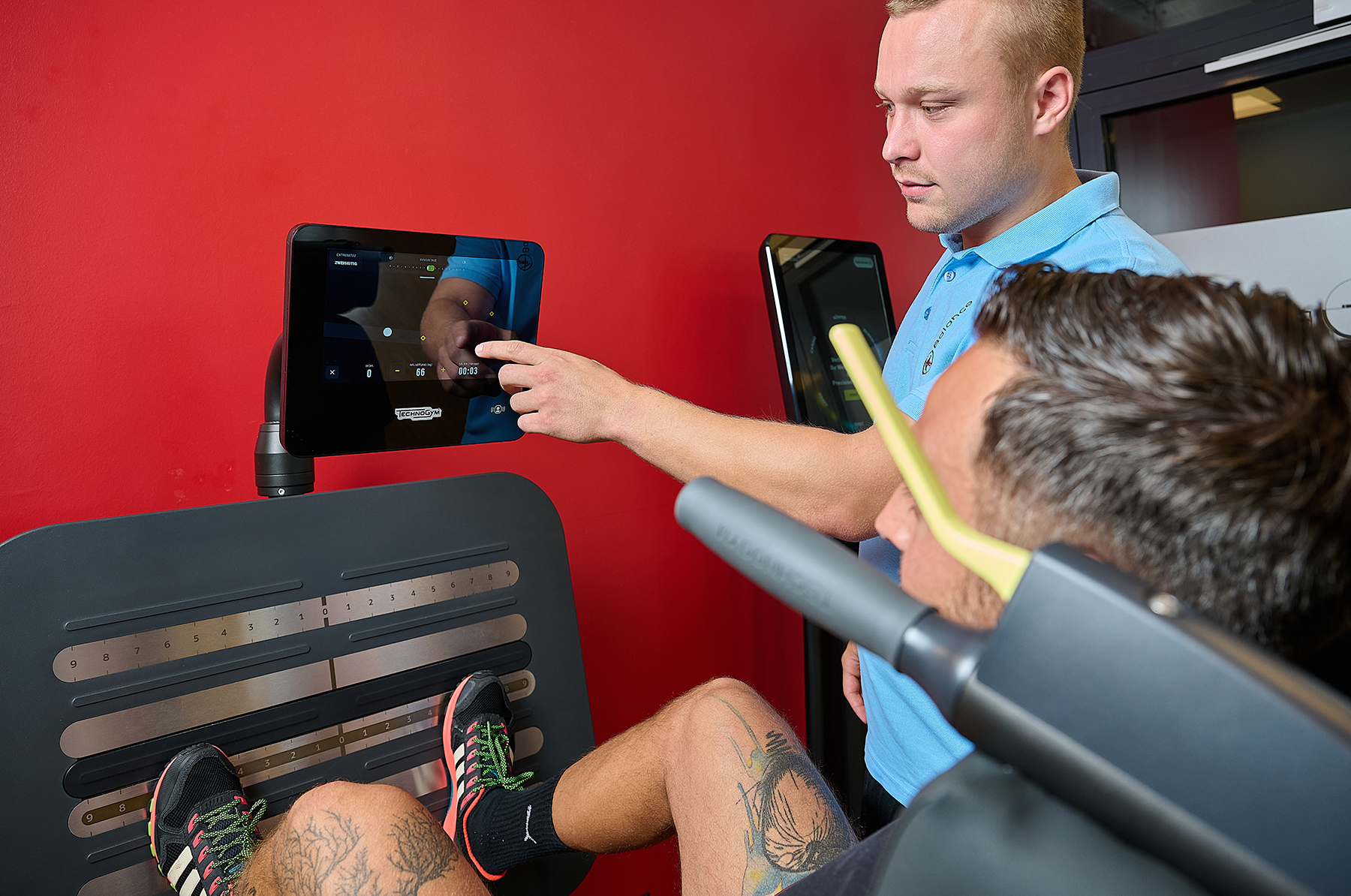
How we work: We use passive measures such as manual therapy or massage selectively. The focus is always on the active part – because that is the only way to build lasting resilience.
For everyone
Physiotherapy supports you in every stage of life
Physiotherapy is worthwhile at any age and any activity level: from muscle and joint pain to acute and persistent complaints and rehabilitation after complicated fractures or injuries.
It helps the marathon runner cross the finish line with a smile, the office worker sit without pain, the construction worker lift without restriction – and perhaps simply helps you play carefree with your children or grandchildren again.
Quality
Quality in physiotherapy
- Personal, goal-oriented care by professionals with bachelor’s and master’s degrees
- Treatment according to current scientific guidelines
- Progress measured with standardised tests and questionnaires
- Transparent coordination with your doctor and insurer
- Modern facilities with a training area under one roof
- PhysioCert-certified quality

FAQ
Frequently asked questions about physiotherapy
Do I need a doctor’s prescription?
To bill basic health insurance, you need a doctor’s prescription. It usually covers up to nine sessions. Without a prescription, you can pay for treatment yourself.
What happens in the first session?
It begins with a detailed conversation and a thorough examination. We then discuss the findings and usually start with the first treatments and exercises straight away.
What should I bring?
Your prescription, any reports or images, comfortable clothing and – if you have any – your questions. If you wish, you can fill in our medical history form in advance.
How many sessions will I need?
That depends on your complaints and goals. We estimate the duration at the start and review progress regularly. The goal is always for you to continue independently.
Sources: Lin I et al., Br J Sports Med 2020 (guidelines) · Hayden JA et al., Cochrane Review 2021 (exercise for back pain) · Fransen M et al., Cochrane Review 2015 (knee osteoarthritis)
Ready for the first step?
We take time for you – in Muttenz and Arlesheim.