Physiotherapy for osteoarthritis
Physiotherapy for osteoarthritis
Condition
Osteoarthritis and joint complaints – movement is the best medicine
Osteoarthritis is one of the most common joint conditions and is still increasing. The good news: targeted exercise and training are among the most effective treatments – for the knee, hip, shoulder and all other joints.
Every case of osteoarthritis is different. That is why we examine your joints thoroughly and put together an individual programme of information, exercises and training.
Good to know
Four facts about osteoarthritis
Scientific evidence
What studies on osteoarthritis show
What this means for you: A targeted training programme is the foundation for osteoarthritis – before and, if necessary, after joint replacement. Being more active means regaining quality of life.
Programme
GLA:D® osteoarthritis programme for the knee and hip
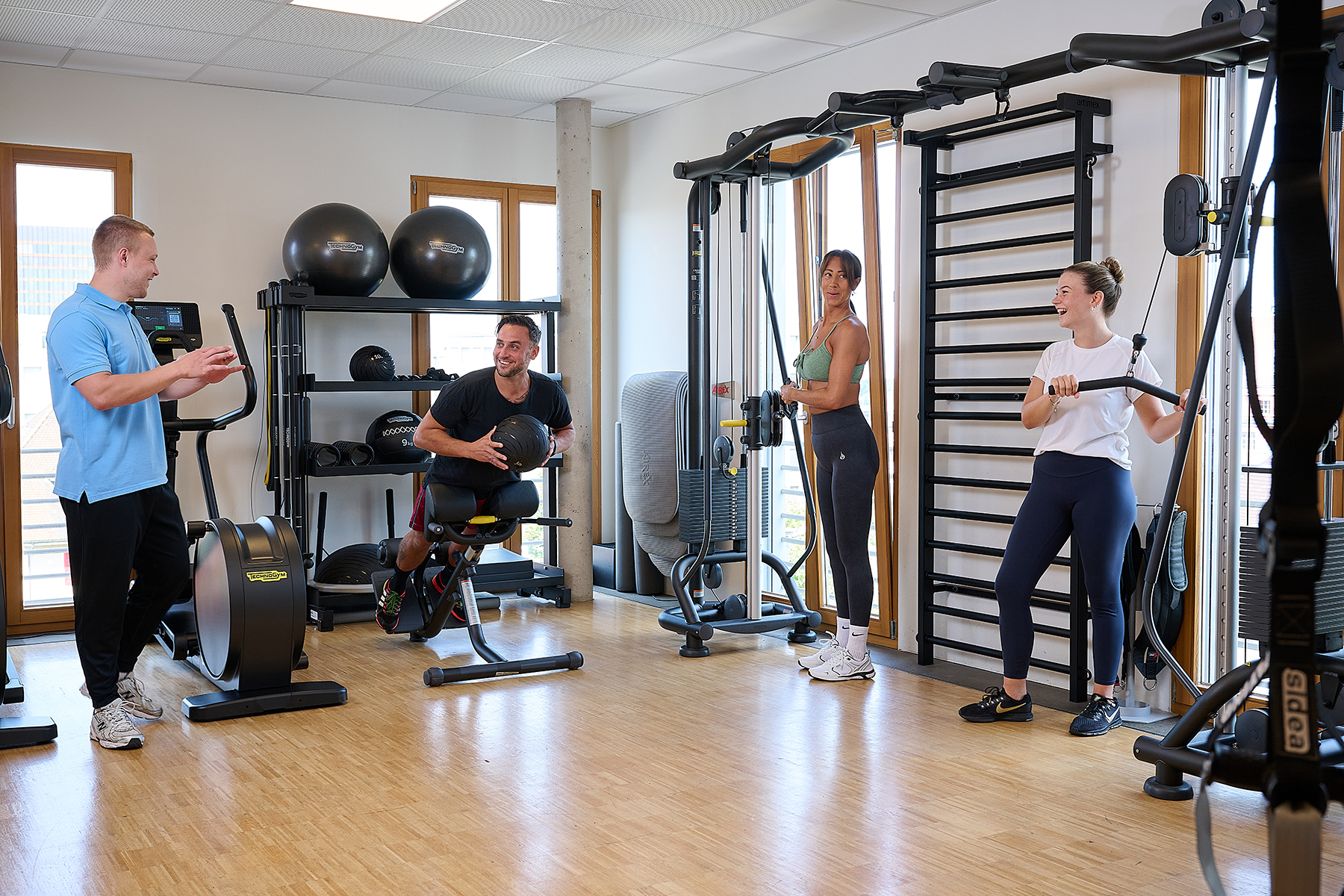
In the GLA:D® programme you learn to manage your knee or hip osteoarthritis independently: with education sessions on osteoarthritis and exercise and supervised neuromuscular training in a group.
- Strengthening the legs and trunk
- Joint control and movement quality in everyday life
- Load tolerance training for the knee and hip
- Building fitness and general strength
- Fun and motivation in a group
Knee
Meniscus: training first
For meniscal tears, too, current guidelines recommend conservative treatment with targeted training first – especially for people over 40. Arthroscopy brings no additional benefit in these cases.
Even for traumatic meniscal tears in younger people, surgery is increasingly being questioned: as long as the knee does not lock, the Danish guideline, for example, recommends training first.
In a Norwegian trial with 140 middle-aged patients, a twelve-week exercise programme was as effective after two years as arthroscopic partial meniscectomy – and the exercise group even had more thigh strength afterwards. The European society ESSKA also recommends around three months of conservative treatment first for degenerative meniscal tears.
- Strengthening the thigh, hip and trunk muscles
- Joint control, balance and movement quality
- Gradual loading up to sport, stairs and kneeling
- Education: what is normal, what is a warning sign?
Surgery mainly makes sense if the knee repeatedly locks, a displaced part of the meniscus mechanically blocks the joint, or symptoms do not improve despite consistent training. We clarify this together with your orthopaedic surgeon.

FAQ
Frequently asked questions about osteoarthritis
Does exercise harm my joint?
No – quite the opposite. Cartilage is nourished by movement, and strong muscles relieve the joint. Good dosage is important: mild, well-tolerated pain during training is usually harmless as long as it settles by the next day.
Can training prevent or delay surgery?
Often, yes. Many people improve their pain and function to the point where surgery is needed later or not at all. And if it is, you are better prepared with trained muscles.
Which sports are suitable with osteoarthritis?
Walking, cycling, swimming, aqua fitness and targeted strength training are good options. What matters is what you enjoy and can do regularly.
What is GLA:D?
GLA:D (Good Life with osteoArthritis in Denmark) is a research-based programme of education and group training for knee and hip osteoarthritis developed in Denmark. We offer it at 4 Balance.
Sources: Fransen M et al., Cochrane Review 2015 (knee osteoarthritis) · Skou ST, Roos EM, BMC Musculoskelet Disord 2017 (GLA:D) · Sihvonen R et al., N Engl J Med 2013 (meniscus) · Kise NJ et al., BMJ 2016 (exercise vs. arthroscopy for meniscal tear) · Beaufils P et al., ESSKA Meniscus Consensus 2017 · More information: gladschweiz.ch · oarsi.org
Joint pain?
Back to more movement and quality of life with targeted training.