Manual therapy in Muttenz
Specific assessment and treatment for the musculoskeletal system
Manual therapy in Muttenz
Specific assessment and treatment for the musculoskeletal system
Manual therapy
Understand first, then treat precisely
Manual therapy helps with back, neck, joint and muscle pain – after overload, an accident or due to wear and tear. It combines a thorough assessment with targeted hands-on techniques, exercises and clear explanations.
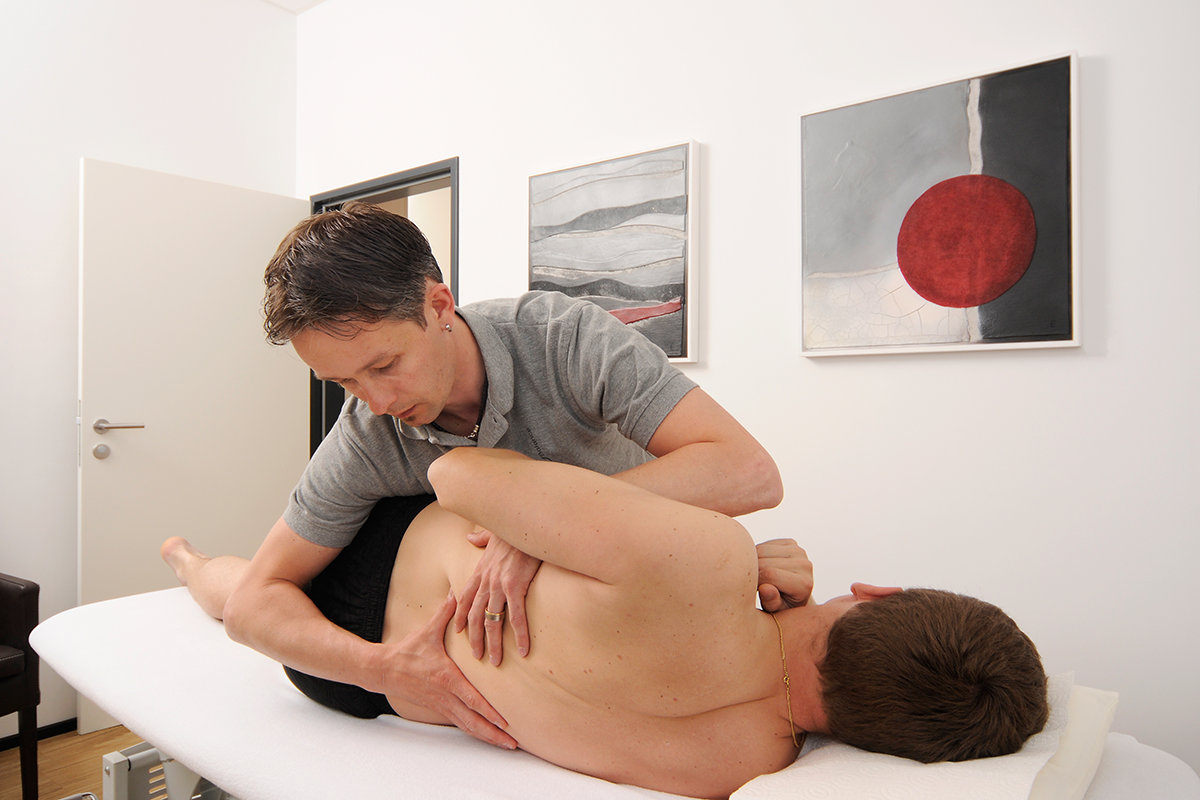
Literally, manual therapy means «treatment with the hands». Today it is much more: a clinical reasoning model that brings together your findings, current research and your personal goals. The hands relieve pain and improve mobility – the real goal is for you to move confidently and actively again.

Assessment
A thorough assessment as the basis of every treatment
This approach follows the eleven consistent recommendations of high-quality guidelines for musculoskeletal pain: work in a patient-centred way, rule out serious causes, assess psychosocial factors, use imaging selectively, carry out a physical examination and measure progress.
Expertise
Advanced musculoskeletal training
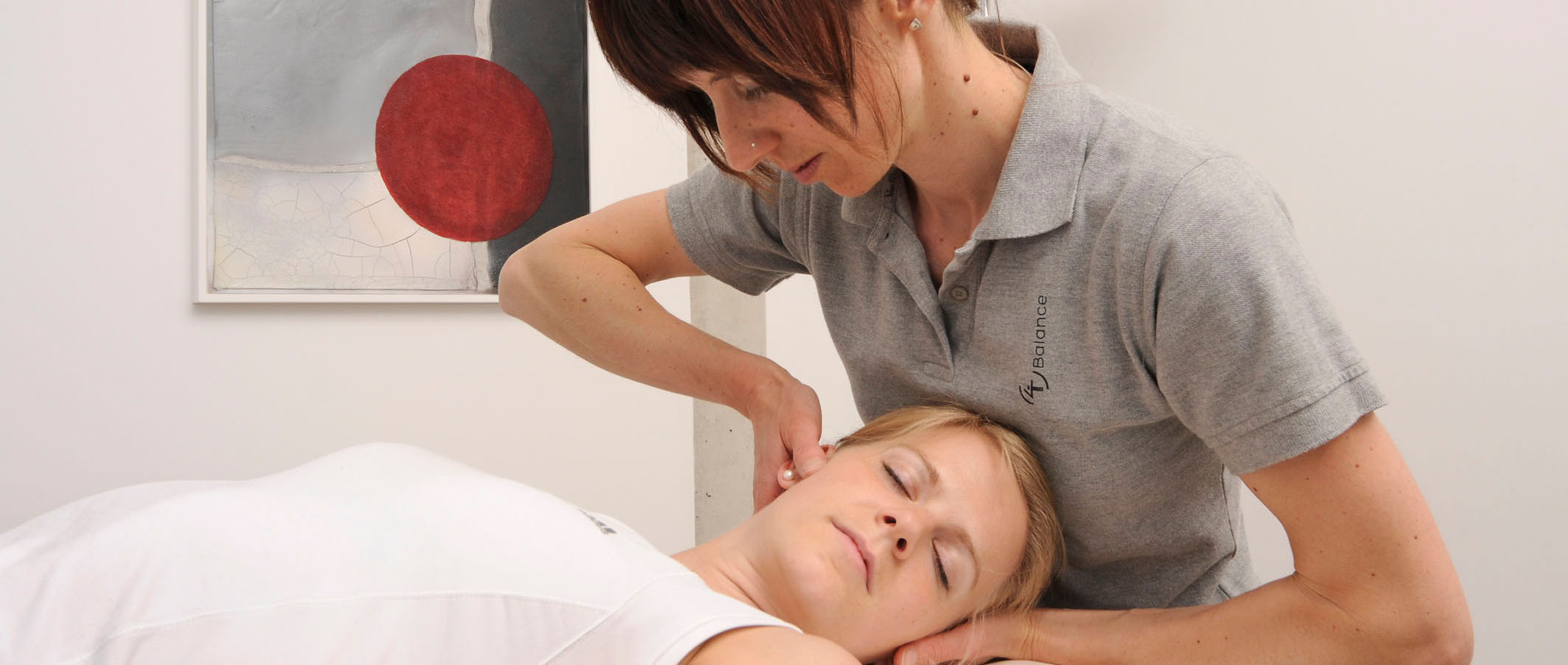
Manual therapy is a specialisation following basic physiotherapy training. Internationally, the IFOMPT (International Federation of Orthopaedic Manipulative Physical Therapists) sets the educational standards, represented in Switzerland by the professional association svomp. Postgraduate training ranges from the CAS in Manual Therapy to the master-level title OMT svomp®.
- In-depth anatomy, biomechanics and pain physiology
- Differential diagnosis and safety tests, e.g. for the cervical spine
- Mobilisation and manipulation techniques for the spine and limbs
- Clinical reasoning and evidence-based practice
- Communication, patient education and exercise therapy
We work with the SOMT / OMT, Maitland, McKenzie, CRAFTA, CFT, Mulligan and SAMT concepts. Our team undergoes continuous further training.
Effectiveness
Particularly helpful for acute complaints
Especially in the first weeks after back or neck pain begins, manual therapy can achieve a great deal: it relieves pain, improves mobility and makes it easier to return to activity.
Good to know: The effects are mainly short-term and vary from person to person. That is exactly why we use pain relief as a window to build up movement and training. After a treatment, temporary muscle soreness or a mild headache may occur – which is why safety tests are part of every examination.
Our approach
Individual, evidence-based, educational and empowering
Activity
Creating the conditions for activity
Research agrees: activity and training are crucial for lasting recovery. Manual therapy creates the conditions for this – it relieves pain and improves mobility so that you can do exercises with little pain and resume your daily life.
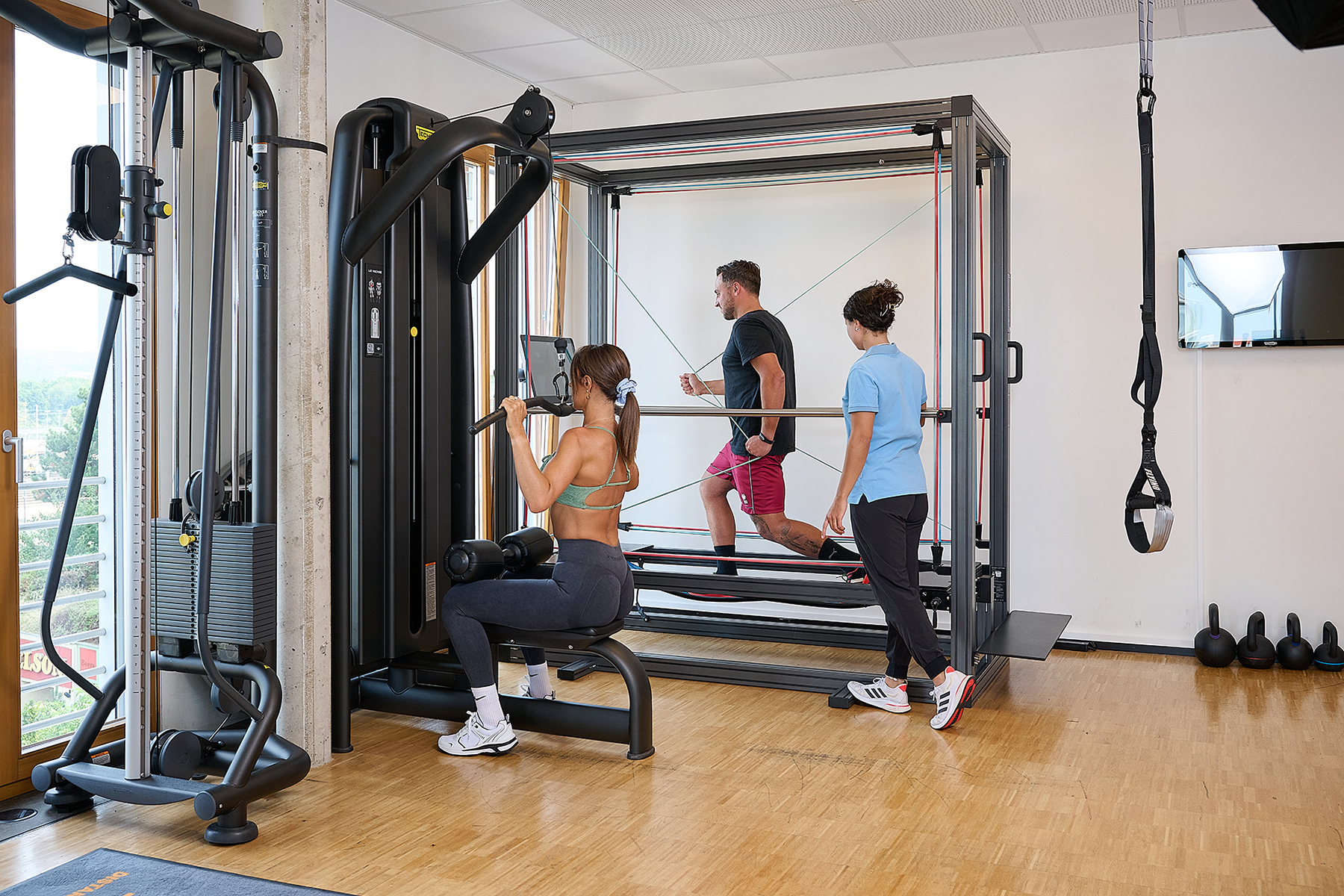
That is why a substantial part of every session is active: with targeted exercises, an individual home programme and, if needed, supervised training in our training centre. Hands-on treatment gradually decreases while your own activity increases.
Indications
- Acute and persistent back complaints
- Thoracic spine complaints
- Neck complaints
- Whiplash (WAD)
- Cervicogenic headache
- Cervicogenic dizziness
- Joint complaints in the limbs, e.g. osteoarthritis
- Preparation for surgery and rehabilitation afterwards
Sources: Paige NM et al., JAMA 2017 (acute back pain) · Wang XQ et al., Clin Rehabil 2024 (acute and subacute back pain) · Chacko N et al., Cochrane Review 2025 (neck pain) · Lin I et al., Br J Sports Med 2020 (guidelines) · Foster NE et al., Lancet 2018 (back pain) · Bialosky JE et al., JOSPT 2018 (mechanisms) · IFOMPT Educational Standards
Acute complaints?
The sooner we assess and treat in a targeted way, the sooner you will be active again.