Lymphatic drainage in Muttenz
Lymphatic drainage in Muttenz
Therapy
Manual lymphatic drainage
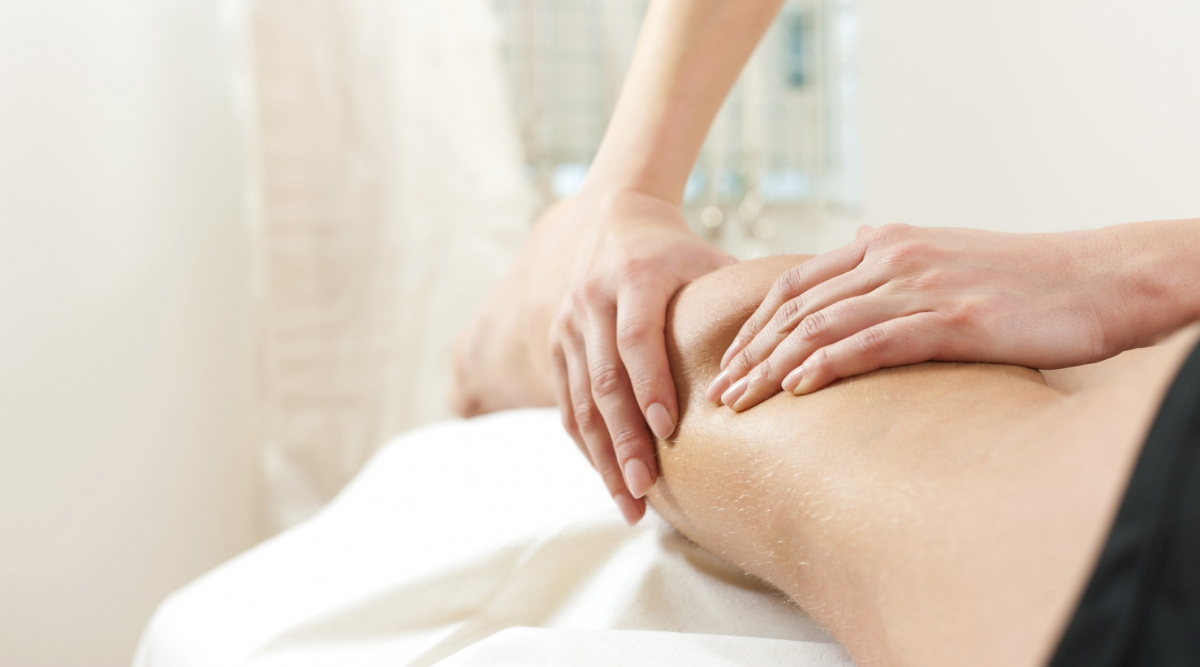
Manual lymphatic drainage is a gentle decongestive treatment technique. It stimulates lymph flow and reduces fluid build-up in the tissue – for example after surgery, injuries or with lymphoedema.
Gentle, rhythmic strokes stimulate the lymph vessels and promote the removal of lymph fluid – so swelling goes down.
How it works
Decongestive therapy in four building blocks
Scientific evidence
What studies show
For a lasting effect: Lymphatic drainage decongests mainly in the first phase. In the long term, compression and training have the strongest effect – which is why we build an exercise and strength programme with you and support you in wearing compression consistently.
Indications
We treat
- Generalised or local lymphoedema
- Swelling after surgery
- Swelling after injuries
- Swelling after amputations
- Condition after lymph node removal
FAQ
Frequently asked questions
How long does a treatment take?
Depending on the region and extent of the swelling, usually 30 to 60 minutes. With lymphoedema, more frequent sessions are useful at the beginning.
When should lymphatic drainage not be used?
For example with acute infections, untreated heart failure or recent thrombosis. We check this before treatment.
Do I need a prescription?
Yes, with a doctor’s prescription, lymphatic drainage is covered by basic health insurance.
Sources: Ezzo J et al., Cochrane Review 2015 (lymphatic drainage for lymphoedema after breast cancer) · Rogan S et al., Breast Cancer Res Treat 2016 (compression and exercise) · Schmitz KH et al., N Engl J Med 2009 (strength training with lymphoedema) · More information: Földi School
Swelling?
We decongest gently and show you how to maintain the result.