
Trigger point therapy in Muttenz
Trigger point therapy in Muttenz
Therapy
trigger point therapy
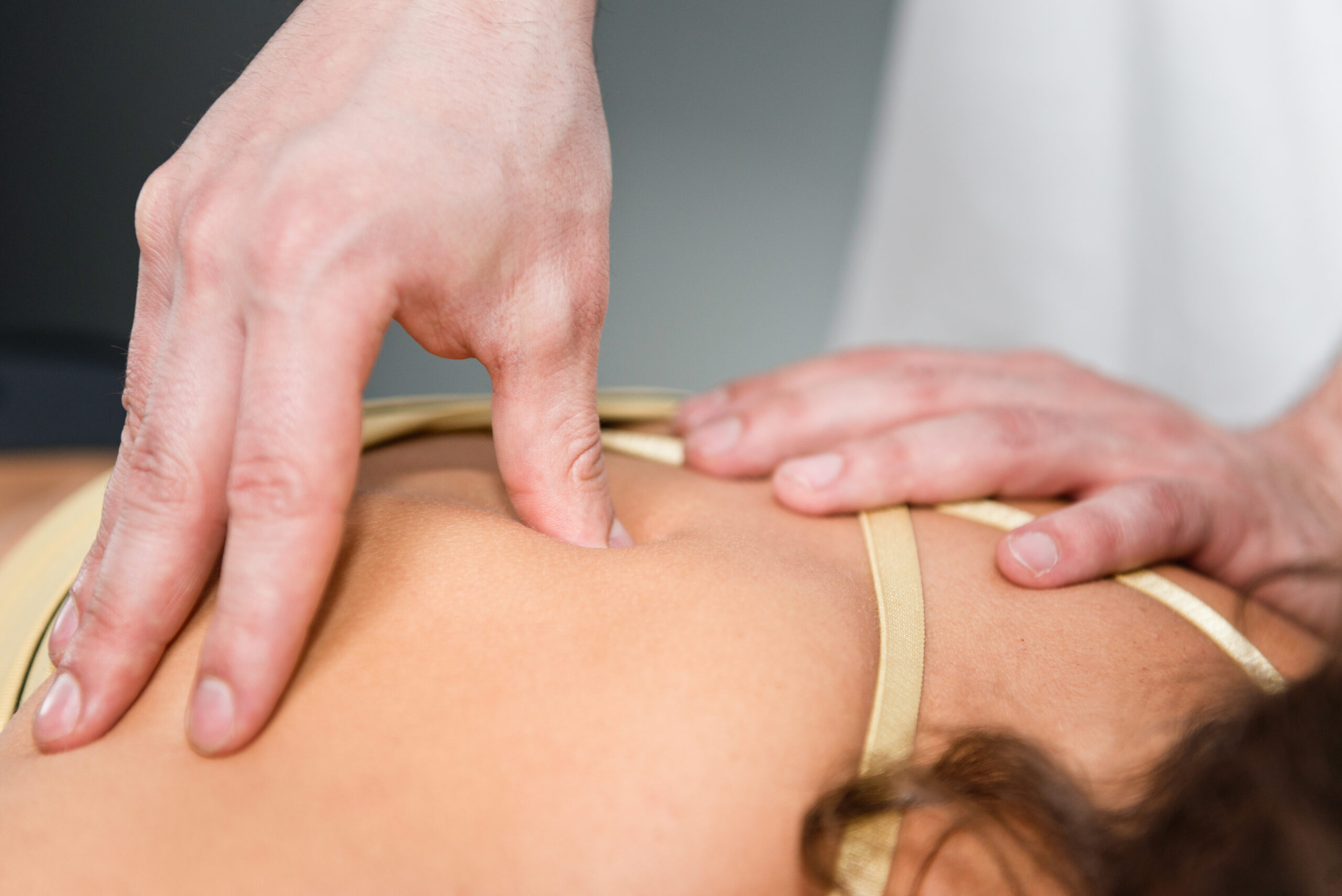
Myofascial knots or trigger points are hypersensitive, palpable areas of tightness in muscles and fascia. They can hurt at rest and during movement and often refer pain to other regions – trigger points in the buttocks, for example, into the leg.
Common causes are constantly tense muscles from long periods of sitting or repetitive movements, sudden overload or too little recovery after sport. Trigger points can also develop as a result of other problems such as osteoarthritis or a disc herniation.
How it works
How we treat trigger points
Scientific evidence
What research says
Important: Untreated trigger points can contribute to persistent pain. The sooner we address the cause, the better.
Indications
Complaints with a muscular cause
- Neck complaints and headaches
- Back complaints
- Shoulder complaints
- Tennis elbow
- Carpal tunnel syndrome (CTS)
- Knee and foot complaints
FAQ
Frequently asked questions
Is the treatment painful?
Pressure on a trigger point can be briefly uncomfortable and reproduce your familiar pain. This is a sign that we have found the right spot. We dose it so that it is well tolerable for you.
What is the difference from dry needling?
Both treat trigger points. In manual therapy we work with our hands, in dry needling with a fine needle. We choose together what suits you.
What can I do myself?
Regular exercise, breaks during long periods of sitting, self-massage for example with a ball, and targeted strengthening. We show you suitable exercises.
Sources: Gattie E et al., J Orthop Sports Phys Ther 2017 (dry needling for trigger points) · Hayden JA et al., Cochrane Review 2021 (exercise)
Radiating muscle pain?
We find the cause and release the knot precisely.